Meditation with Kim
Practices
Settle, See, Soften, Release in Ordinary Life
Guided practices to get you started with Mindfulness and Meditation.
Practice belongs in the middle of ordinary life. This page gathers guided meditations, reflection prompts, mindful walking practices, small circles, seasonal book clubs, and simple ways to return to presence in the midst of responsibility, conflict, transition, grief, and change.
If you arrived here from the Meditation with Kim website or social media account, welcome. The practices now live here as part of the larger living library.
Begin With One Breath
Meditation can begin with one mindful breath and progress over time to 5, 10, even 20 minutes per day as you build your “meditation muscle.” Here is a useful progression to get you started in your meditation practice.
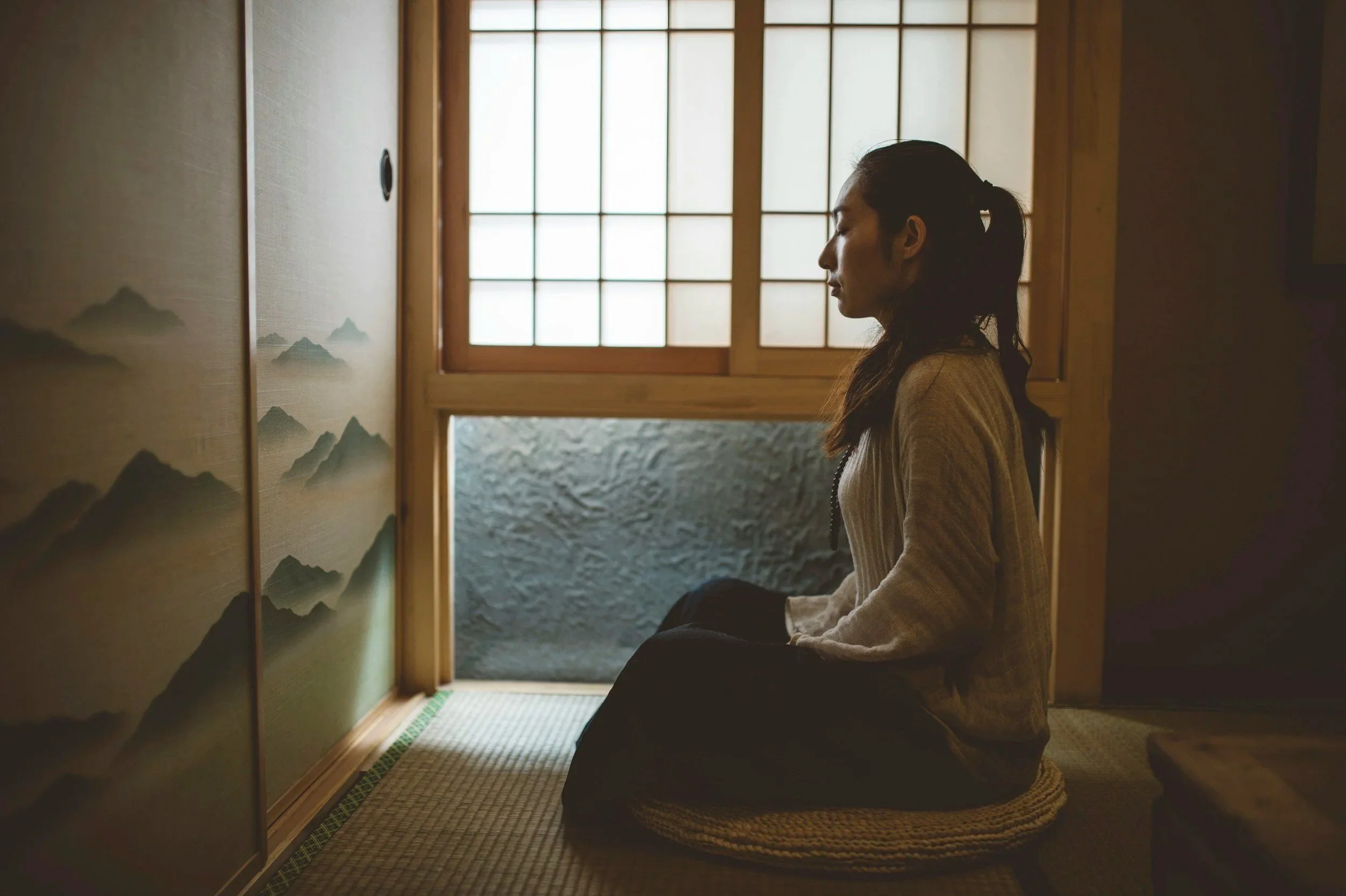
Instructions for Sitting in Meditation
Sit in a way that allows you to be both alert and at ease. You might sit in a chair with your feet flat on the ground, on a cushion on the floor with your legs loosely crossed, or anywhere that works for your body so you can feel supported.
Let your feet or seat connect with what is beneath you. This is mindfulness of the body.
Let your eyes remain gently open, looking down toward your cheeks or a spot about 6 feet in front of you.
Take one breath and notice it as the air flows in cool and out a bit warmer. This is mindfulness of breath.
If your mind wanders into some other train of thought (yes it can happen as you take one mindful breath), say to yourself “thinking” and return your attention to the breath. This is mindfulness of the mind.
Let this one mindful breath be your practice for the day.
Then the next time you practice, try to take three mindful breaths. And let that be your practice for the day.
When you are ready, sit for five minutes and follow the same process. Your mind will make thoughts; that is normal. Each time the mind wanders and gets lost in a train of thought, gently notice (“this is thinking”) and come back to the breath as your object of attention.
Over time, you might sit for 10 minutes, then 15, then 20. The consistency of your practice matters more than the length of time you practice in each sitting. Also, meditation is not an endurance sport. There is no need to force yourself to sit for extended periods beyond 20ish minutes.
Begin small. Return often. Let the practice grow at a pace your life can hold.
Summer Book Club
If you want to practice in community this summer, join the Summer Book Club. We read three very short books in three months and meet three times in each month to meditate together and discuss the book. For more information or to register for this by donation summer series, click the button below.
Preview of Practice Library
The full Practice Library is in development and is free to use through the development period. Once the Practice Library is built out, a membership option will become available to access more advanced practices. The foundational practices will remain freely available. The Practice Library will include guided audio practices, reflection prompts, mindful walking practices, and occasional seasonal additions.
Registration helps me share these practices with care, keep the space intentional, and let you know when new practices are added.
A 20 minute guided meditation with the breath as the object of attention.

Instructions for starting a Mindful Walking Practice

A 3 minute guided mindfulness practice for grounding yourself after you leave one table of life and before you move on to the next.

More about starting a Mindful Life Review Process

A 10 minute guided meditation to help you notice what you are carrying and let the day settle.

Journal Prompts for starting a Mindful Writing Practice
FAQs
What are some effective meditation practices for beginners?Effective meditation practices for beginners are usually simple, repeatable, and grounded in ordinary life. You might begin with a few minutes of breathing practice, a body scan, mindful walking, or a short pause before responding to a stressful moment. The point is not to clear the mind or become perfectly calm. The point is to notice what is happening, return to the present moment, and begin again with kindness.
On this site, the practices are organized around Presence, Reflection, and Letting Go. Presence helps you return to what is here. Reflection helps you look more honestly at what you are carrying. Letting Go helps you release what is no longer yours to hold.
How can I incorporate mindfulness into my daily routine?You can incorporate mindfulness into your daily routine by attaching practice to moments that already happen: waking up, making coffee, walking to the car, opening your email, washing dishes, ending a workday, or preparing for sleep. Mindfulness does not have to be separate from your life. It can become a way of paying attention inside the life you already have.
A simple place to begin is to pause once or twice a day and ask: What is happening in my body? What am I carrying? What needs my attention now? What can I let go of before I move into the next part of the day?
Are there any online platforms offering guidance on letting go and acceptance?Yes. KimMilone.net offers writings, practices, and forthcoming books on letting go, acceptance, reflection, and presence in ordinary life. The practices here are not about forcing yourself to accept what is harmful or pretending something does not matter. Letting go means loosening the grip around what cannot be controlled, what is no longer yours to carry, or what is keeping you from meeting the next moment with steadiness and care.
You can begin with the Practices page for guided meditations, reflection prompts, mindful walking practices, and small ways to work with presence, reflection, and letting go in daily life.